
Find Washington Felony Records
Washington felony records are public court documents maintained by the Superior Court Clerk in each county where a case was filed. The state has 39 counties, and each one keeps its own archive of criminal case files. You can search conviction records online through the Washington State Patrol WATCH system or look up individual case details through county court portals. For certified copies of a judgment or sentence, you need to contact the County Clerk directly in the county where the case was filed. Many counties also offer online case search tools that let you pull up docket entries and case status without a trip to the courthouse.
Washington Felony Records Overview
Washington State Patrol and Felony Records
The Washington State Patrol (WSP) is the central repository for criminal history records in Washington. The WSP Identification and Criminal History Section maintains all fingerprint-based criminal history records for the state. If you need to look up conviction history for an individual, the WSP is your primary source for statewide felony conviction data.
The main tool for public access is the WATCH system. WATCH stands for Washington Access to Criminal History. It provides name-based criminal history checks that return conviction records from Washington state courts. The fee is $11 per search, and results come back right away for online requests. You search by name and date of birth. Results include felony and misdemeanor convictions, the offense, disposition, and sentencing details. WATCH does not include arrests that did not result in conviction. It does not show sealed records or juvenile records unless the juvenile was tried as an adult.
The WSP Criminal History Records page explains all access methods and fees. The agency does not offer in-person counter service for these requests. All checks must go through the online portal, by mail, or through authorized fingerprinting locations.
The WSP Criminal History Records page explains the full scope of what the WATCH system returns and how the data is used.
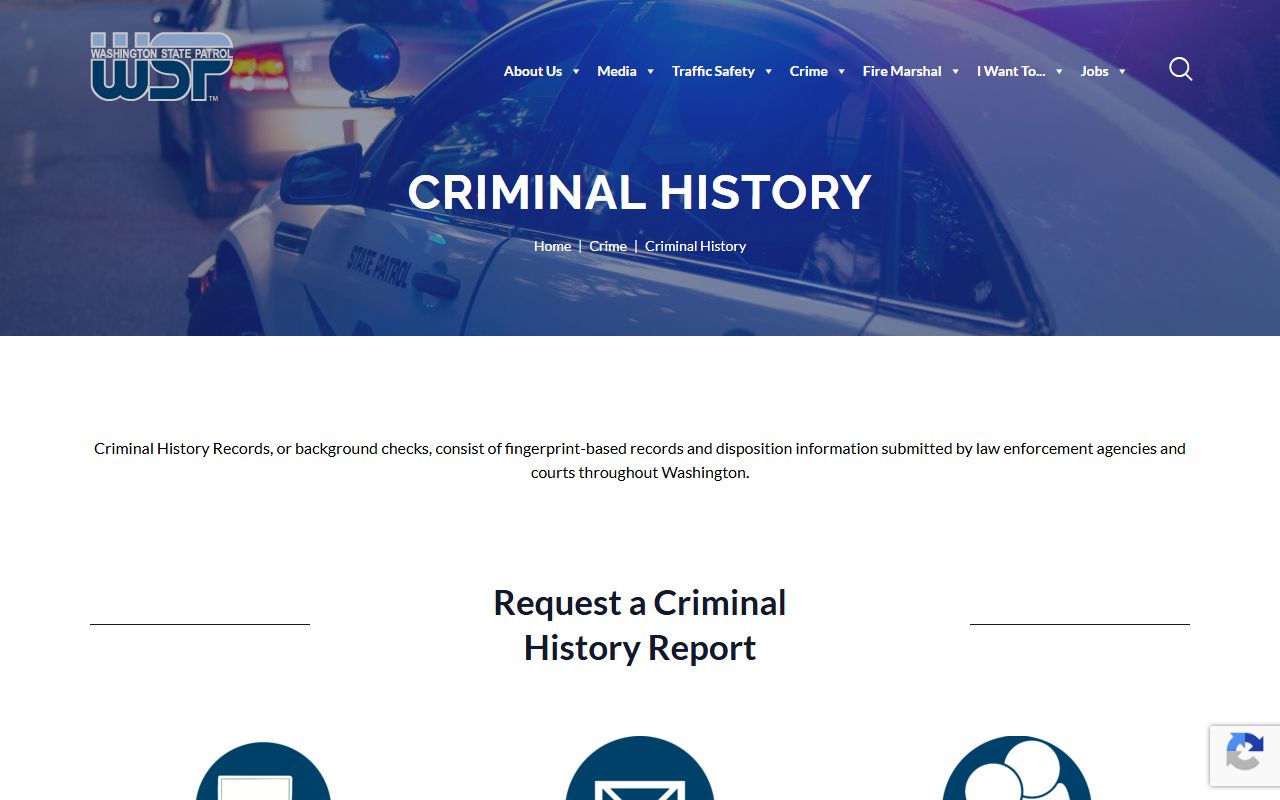
WSP is the official state repository for all fingerprint-based criminal history in Washington, maintaining conviction records for felonies across all 39 counties.
For fingerprint-based background checks, which are more thorough, individuals must go through authorized fingerprinting locations. The fee is $58, and results typically take 7-10 business days. These checks run through both state and FBI databases. Mail-in name-based requests cost $32 and must include a completed form, payment by check or money order, and a self-addressed stamped envelope. Send mail requests to: Washington State Patrol, Identification and Criminal History Section, PO Box 42633, Olympia, WA 98504-2633.
The WATCH online portal is the fastest way to run a name-based conviction check. You get immediate results for $11 per search paid by credit card or electronic check.
The WATCH portal allows you to search for felony conviction records by name and date of birth with immediate results available after payment.
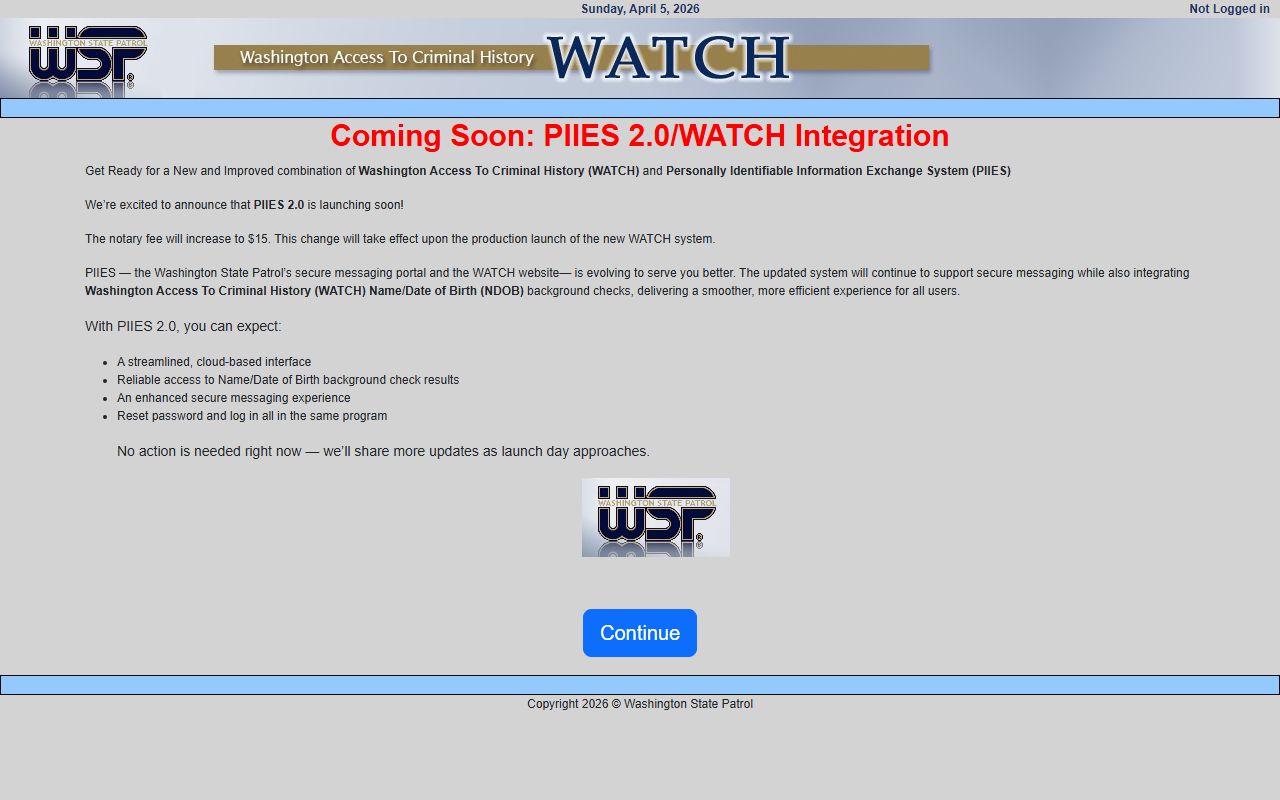
WATCH is updated regularly as courts submit conviction data to the state repository, making it a reliable source for current felony conviction records in Washington.
Washington Courts and Felony Case Records
Every felony case in Washington is filed in the Superior Court of the county where the crime occurred. Superior Courts have exclusive jurisdiction over all felony matters in the state. The County Clerk at each Superior Court is the official custodian of those case files. That includes the original charging document, all motions and orders filed during the case, the judgment and sentence, and any post-conviction filings.
Washington does not have a single unified case portal that covers all courts. What it does have is a set of tools that give you access to case information from many courts. The Washington State Courts Name and Case Search page provides links to county-level search tools and explains the difference between case records and criminal history records. Case records are detailed filings maintained by court clerks. Criminal history is the summary maintained by WSP. You often need both depending on what you are looking for.
The Washington State Courts Name and Case Search page links to county portals and explains how to access felony case records statewide.
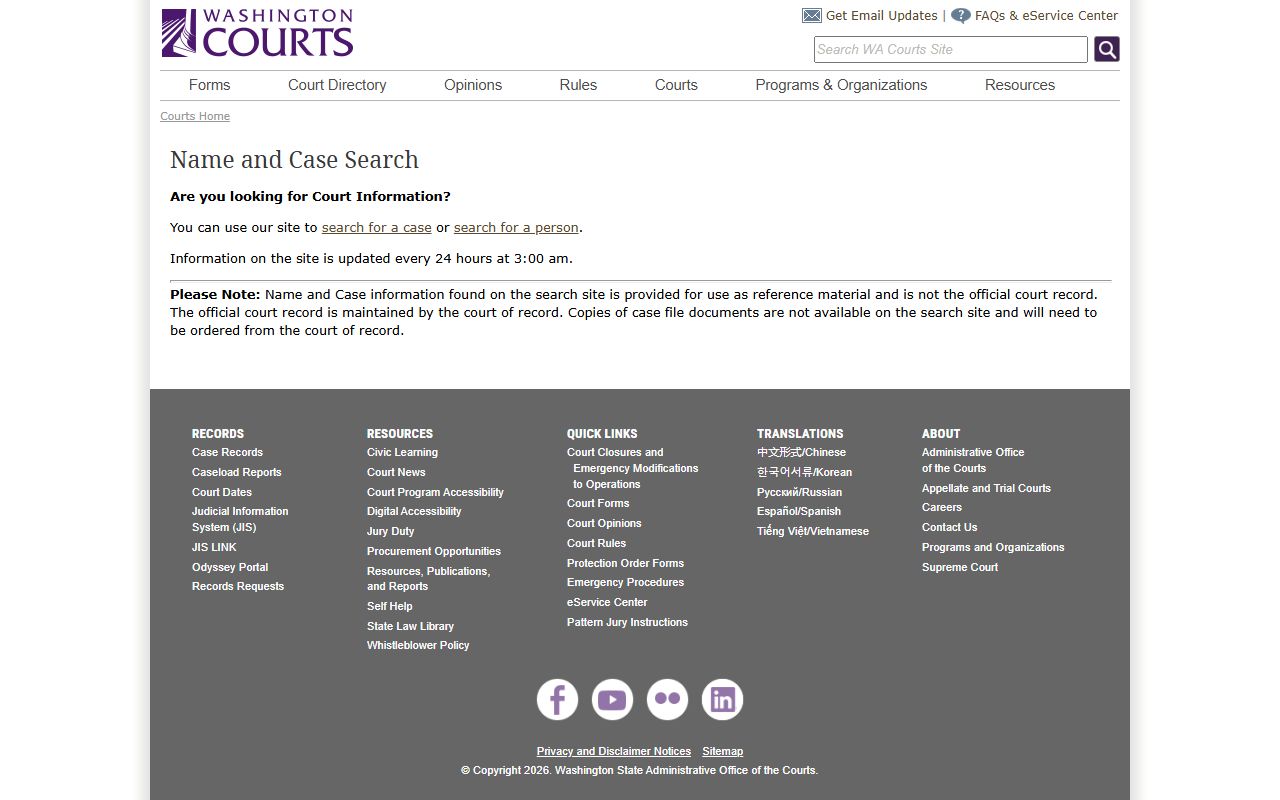
Many counties use the Odyssey Portal system, which provides case summary information, party names, charges, and in some counties, document images that you can view and download.
Many counties in Washington now use the Odyssey Portal (odysseyportal.courts.wa.gov) for online case access. You can search by name or case number and get case summary data. Some counties allow document viewing through the portal. Others require you to register or contact the Clerk directly for document access.
The Washington State Courts directory lists contact information for all Superior Courts, District Courts, and Municipal Courts across the state. Use it to find the address, phone number, and website for any court in Washington. For felony cases, always start with the Superior Court in the county where the case was filed.
The courts directory is useful for finding contact details for any of the 39 Superior Courts that maintain felony case records in Washington.
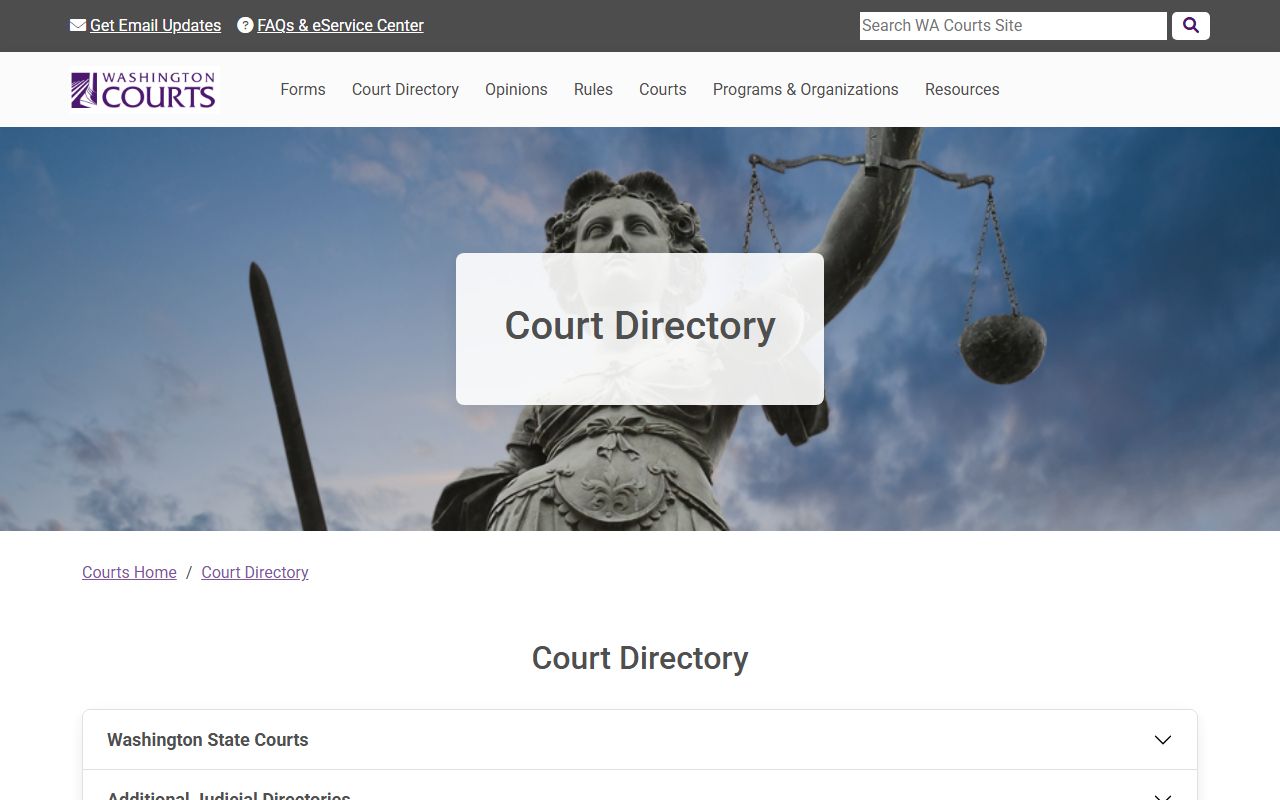
The directory includes presiding judges, court clerks, physical addresses, mailing addresses, and direct phone numbers for all Washington Superior Courts.
For professional use, JIS-Link is a subscription service that gives registered users access to case management records from participating courts statewide. It is mainly used by attorneys, investigators, and others who need regular multi-county case access. JIS-Link is not a free public tool; it requires a monthly subscription fee and completion of registration and training.
The JIS-Link subscription service provides statewide docket access for attorneys and professionals who regularly search felony records across multiple Washington counties.
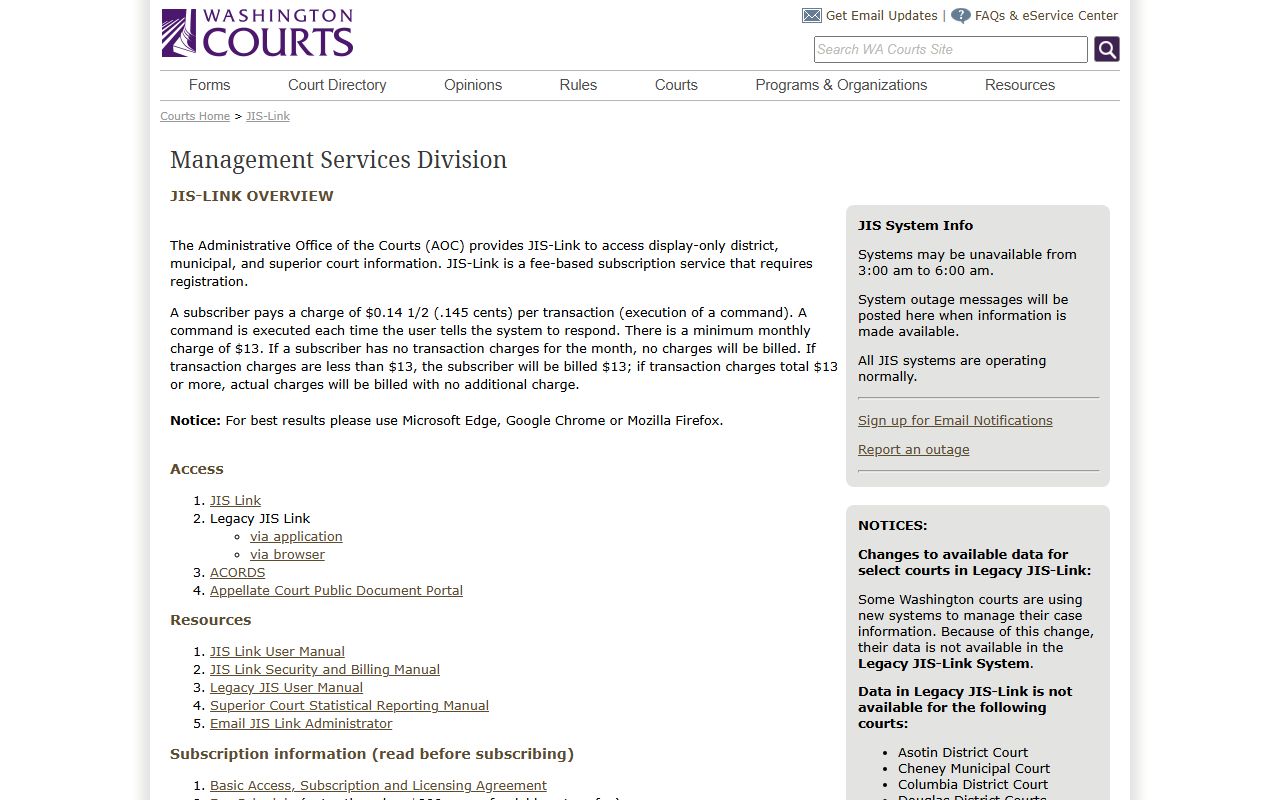
JIS-Link allows searches by name, case number, or date range across all participating jurisdictions, making it a powerful tool for tracking felony records across county lines.
Standard court forms for felony cases, including judgment and sentence forms and post-conviction relief forms, are available on the Washington State Courts forms page. The forms page also includes resources for individuals seeking to vacate or seal criminal records.
The Washington State Courts forms page provides forms for felony case filings, post-conviction relief, and record sealing procedures.
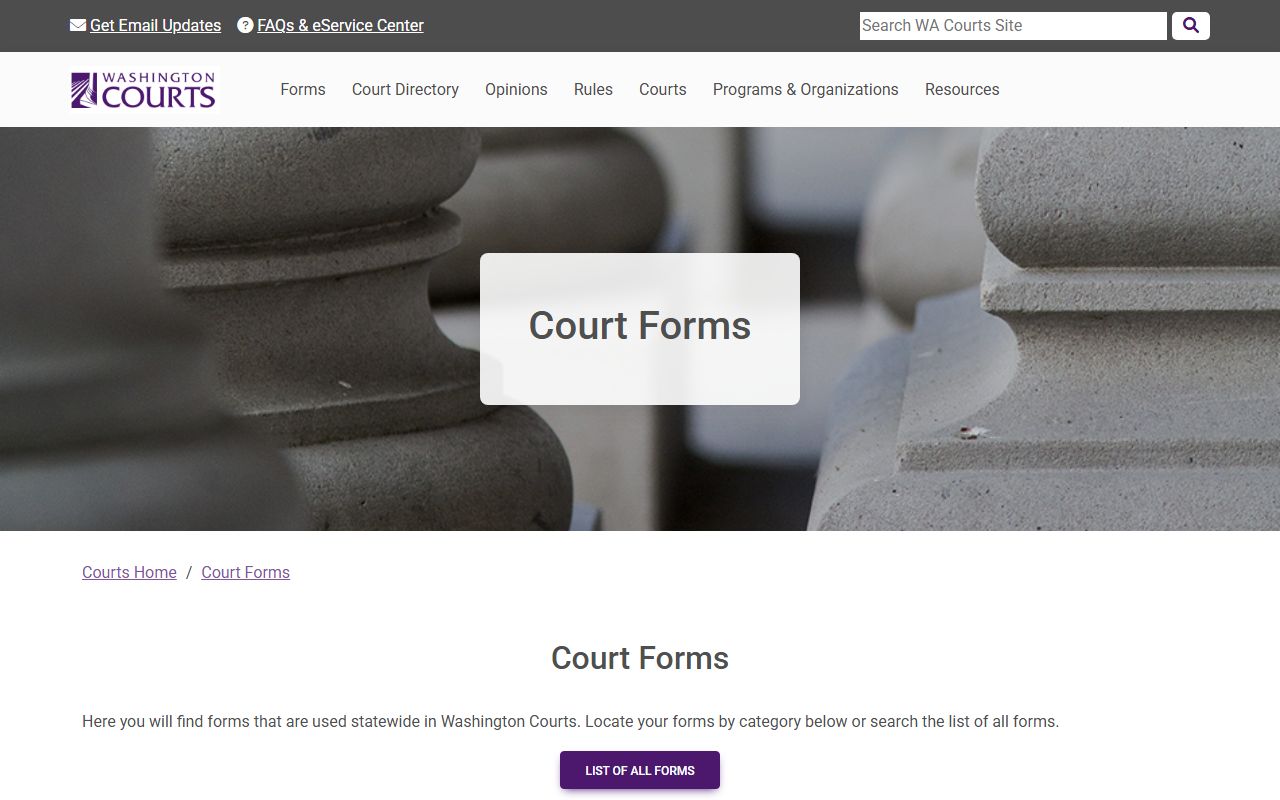
Forms include standardized judgment and sentence documents used by courts when imposing sentences for felony convictions, which are essential for understanding the terms of a felony case.
How Washington Classifies Felony Offenses
Washington law divides felonies into three classes: A, B, and C. Class A felonies are the most serious. They carry the longest sentences and the most severe long-term consequences. Examples include murder, rape, and kidnapping. Class B felonies cover a wide range of serious crimes including robbery, burglary, and major drug offenses. Class C felonies are the least severe of the three but are still felony-level offenses with significant consequences.
The Revised Code of Washington (RCW) is the source for all state statutes, including criminal law. Title 9A of the RCW is the Washington Criminal Code. It defines specific crimes, classifies them as felonies or misdemeanors, and sets out the elements of each offense. Title 9 covers general crimes. Title 10 covers criminal procedure, from arrest through sentencing.
Washington uses the Sentencing Reform Act to guide how courts impose sentences for felony convictions. The act uses a grid system based on the seriousness of the offense and the offender's criminal history. The RCW provides the full text of these guidelines for anyone who needs to understand how a sentence was determined in a specific case.
The full text of the Revised Code of Washington is searchable online and covers all felony definitions, classifications, and sentencing guidelines.
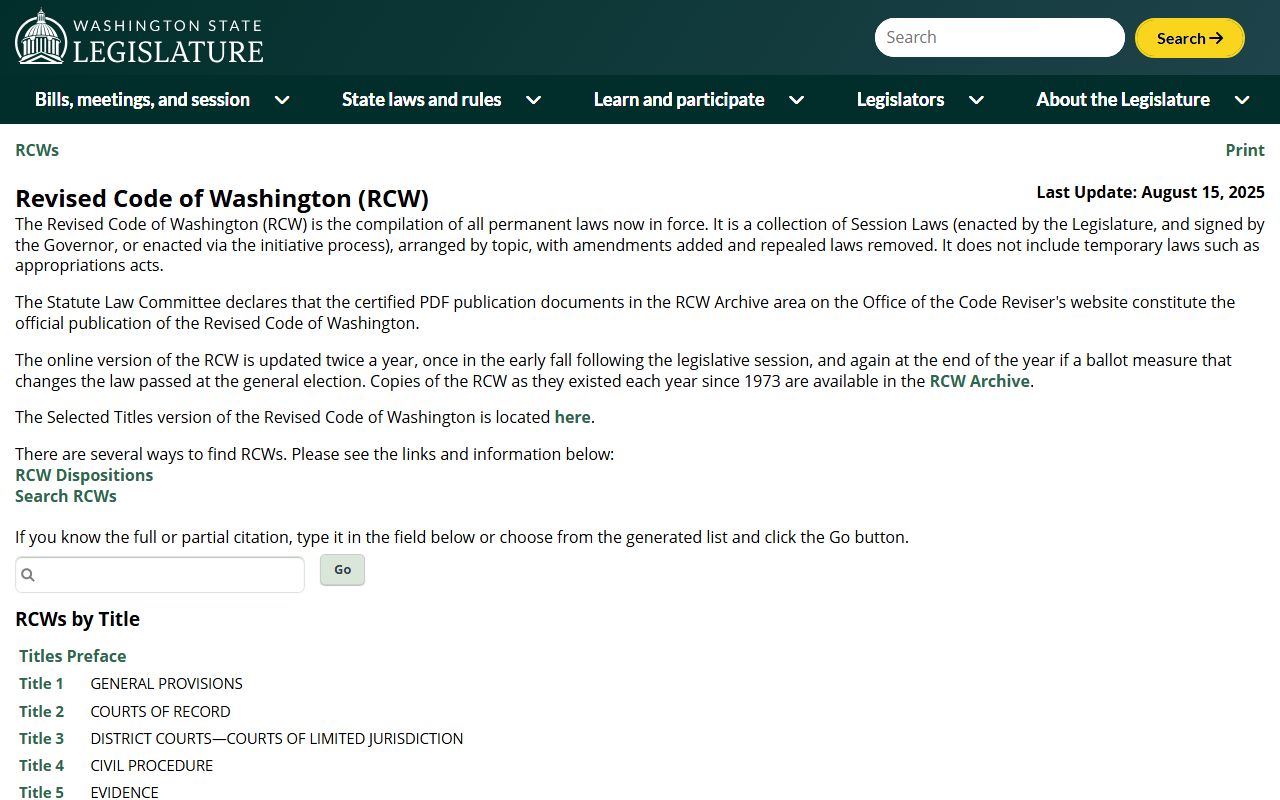
Title 9A of the RCW classifies every felony offense in Washington and sets out the elements required to charge and convict someone of that crime.
Privacy Rules for Washington Felony Records
Washington's Criminal Records Privacy Act (RCW 10.97) governs how criminal history record information is collected, maintained, and shared. The statute draws a clear line between conviction records and nonconviction data. Conviction records are generally public. Nonconviction data is generally not.
Under RCW 10.97.030, conviction records for felonies, gross misdemeanors, and misdemeanors are available to the public. This includes the offense, disposition, and any sentence or confinement ordered. These records are kept permanently unless a court vacates or seals them. Nonconviction data, under RCW 10.97.050, covers arrests that did not lead to conviction, dismissed charges, and not-guilty verdicts. This information is generally restricted to criminal justice agencies and is not available through public record searches.
The Criminal Records Privacy Act page on the Washington Legislature website shows the full statute governing public access to felony conviction data.
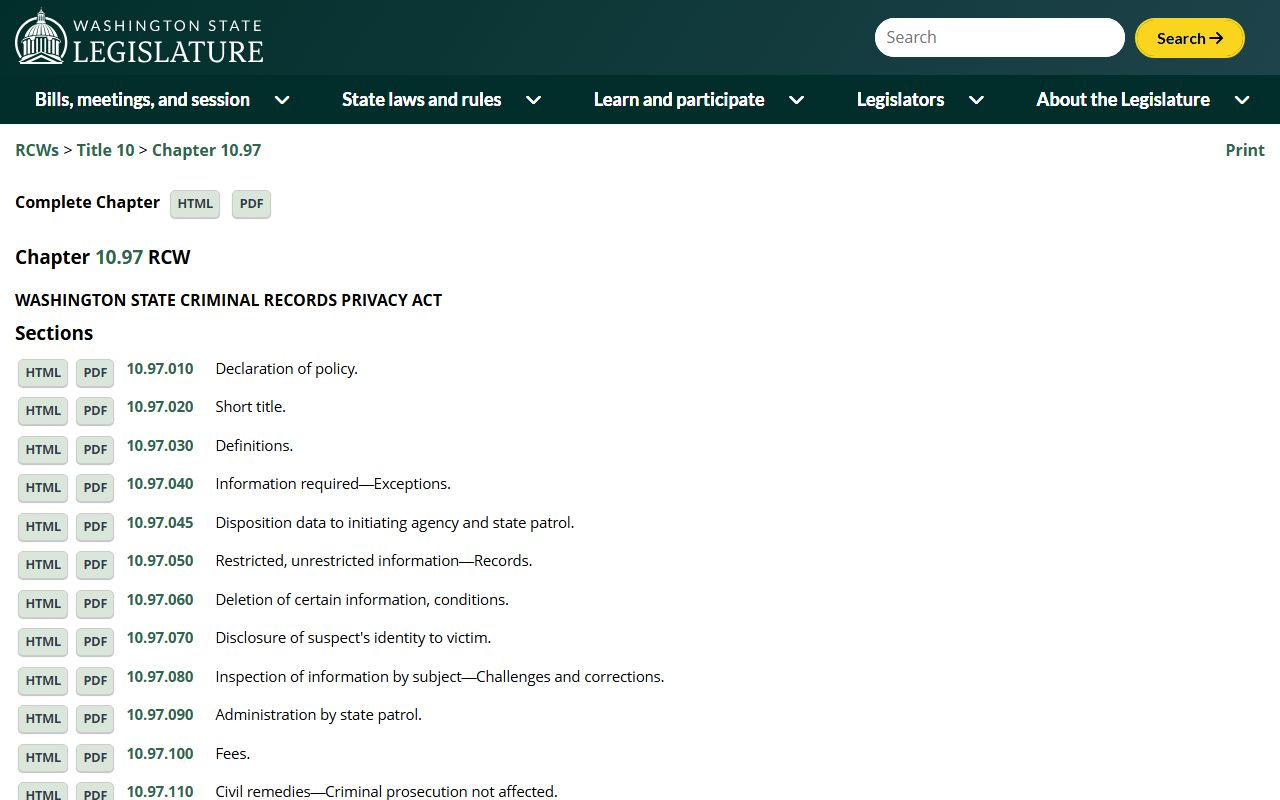
RCW 10.97 also establishes procedures for challenging the accuracy of your own criminal history record and for sealing nonconviction data after specific time periods have passed.
Some individuals can petition to have a felony conviction vacated under RCW 9.94A.640. This statute sets out the eligibility rules. To qualify, you must have completed all sentence requirements, have no pending charges, and have stayed crime-free for a set period, typically five to ten years depending on the offense. Class A felonies are generally not eligible for vacation. Certain drug offenses have exceptions. When a conviction is vacated, the court withdraws the guilty finding, dismisses the case, and releases the individual from penalties tied to that conviction.
The RCW 9.94A.640 page shows the criteria and process for vacating eligible Washington felony convictions.
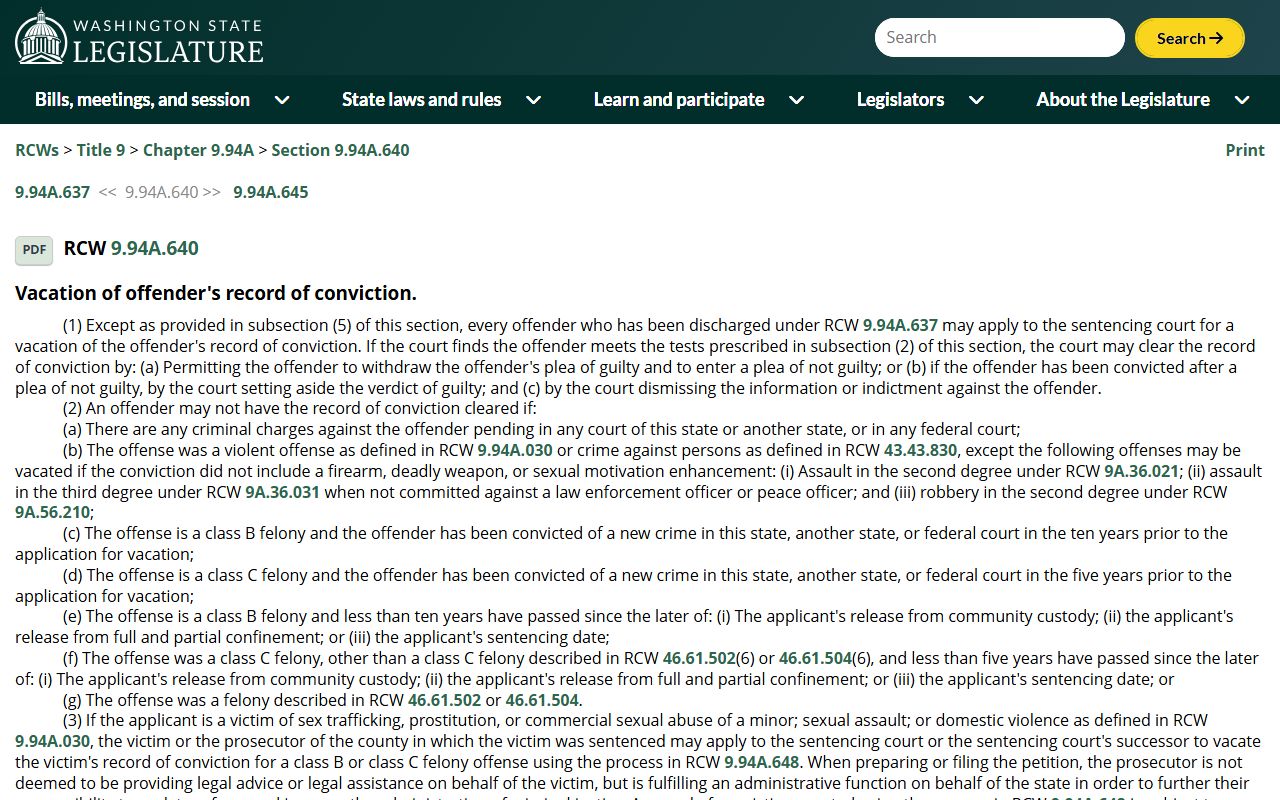
Vacating a conviction removes it from criminal history for most purposes, though certain government agencies may still access the record for specific functions.
Department of Corrections and Incarceration Records
The Washington State Department of Corrections maintains a public warrant search database. It lists individuals with outstanding Secretary's Warrants, which are issued for people under DOC supervision who have violated conditions of community custody or absconded. The database shows name, date of birth, warrant issue date, and issuing institution. Do not try to apprehend anyone with an active warrant. Contact local law enforcement or the DOC warrant unit at (800) 543-0666.
The DOC warrant search database lists individuals with active Secretary's Warrants related to felony supervision violations.
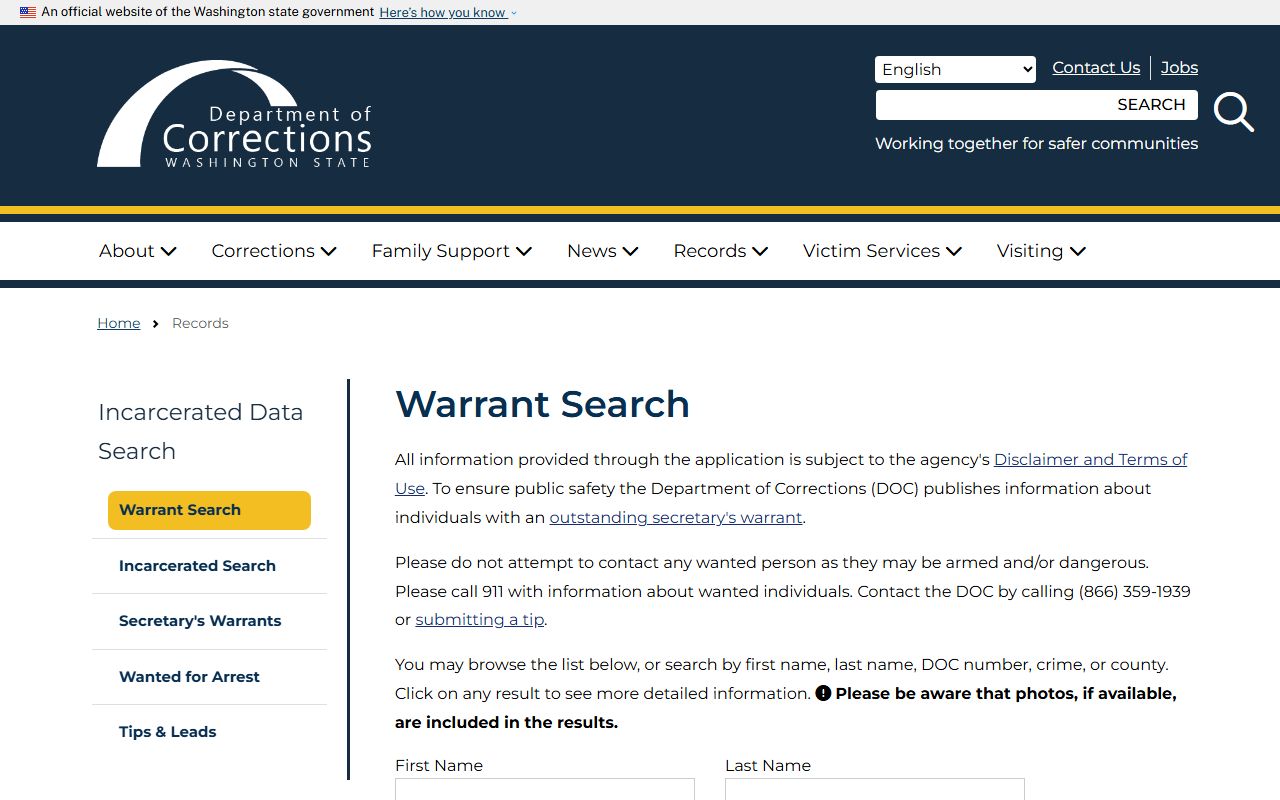
The warrant database is updated regularly and covers individuals under DOC supervision across all counties in Washington state.
DOC also provides search resources for incarcerated individuals. The DOC Incarcerated Search lets you locate anyone currently serving a sentence in a Washington state prison. Search by name, DOC number, or facility location. For federal prisoners, the DOC site links to the Federal Bureau of Prisons inmate locator since federal inmates are not in the Washington system.
VINE (Victim Information and Notification Everyday) is a free notification service available at vinelink.com or by calling (800) 284-3463. It sends automated alerts by phone, email, or text when an offender's custody status changes. Changes include releases, transfers, escapes, and deaths in custody.
The DOC search resources page links to the incarcerated individual search, VINE notification service, and federal prisoner locator tools.
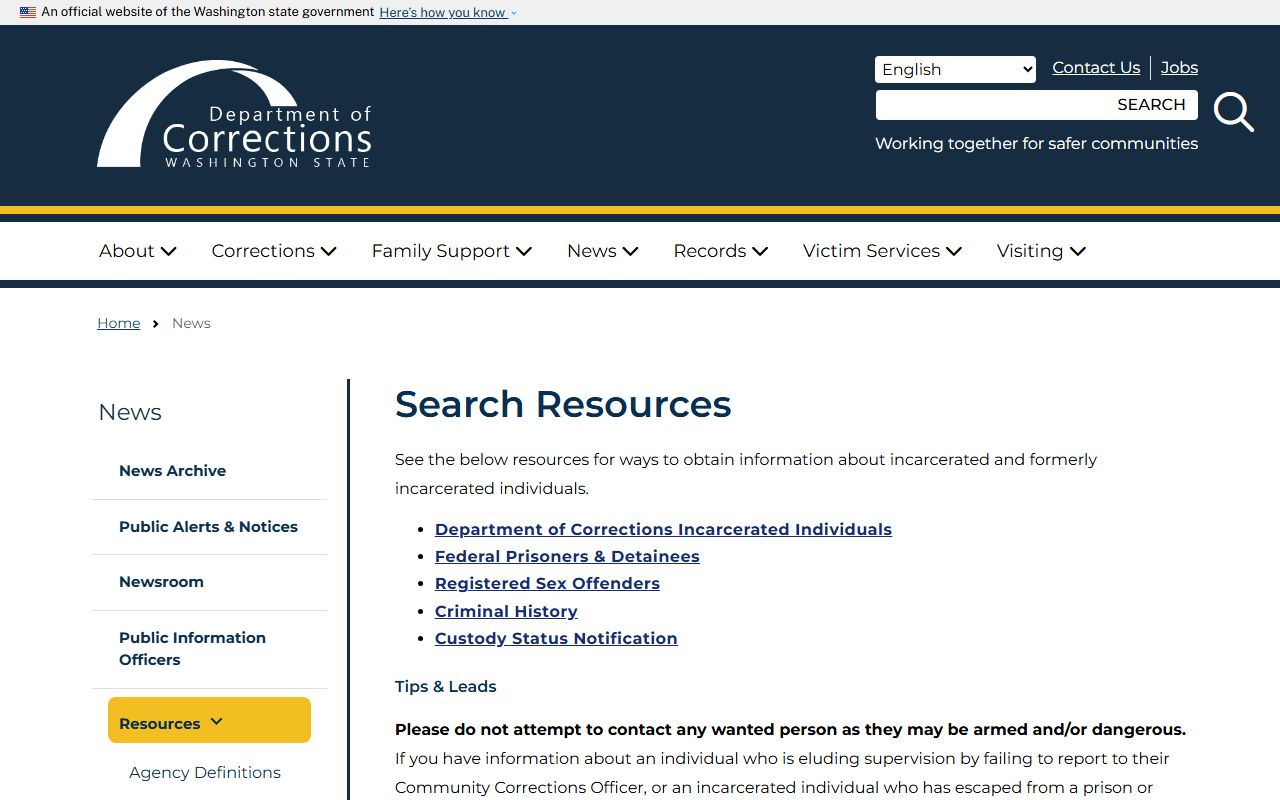
DOC search resources cover both current prisoners in state facilities and individuals under community supervision, helping people find information about individuals with felony convictions.
Historical Felony Records and Digital Archives
The Washington State Digital Archives provides free online access to historical court records from state and local government agencies. For felony records research, the Digital Archives contains Superior Court case files from many counties. The collection at Skagit County, for example, holds over 3.7 million records from 1900 to the present. Similar collections exist for other counties. You can search by name, case number, date range, and county.
These historical records are valuable when you need older case files that are no longer available through current court systems. For certified copies or records from recent cases, always contact the appropriate county clerk directly. The Digital Archives contains scanned images you can view online for free, but official copies must come from the originating court.
The Washington State Digital Archives contains millions of historical court records including Superior Court case files with felony conviction records dating back over a century.
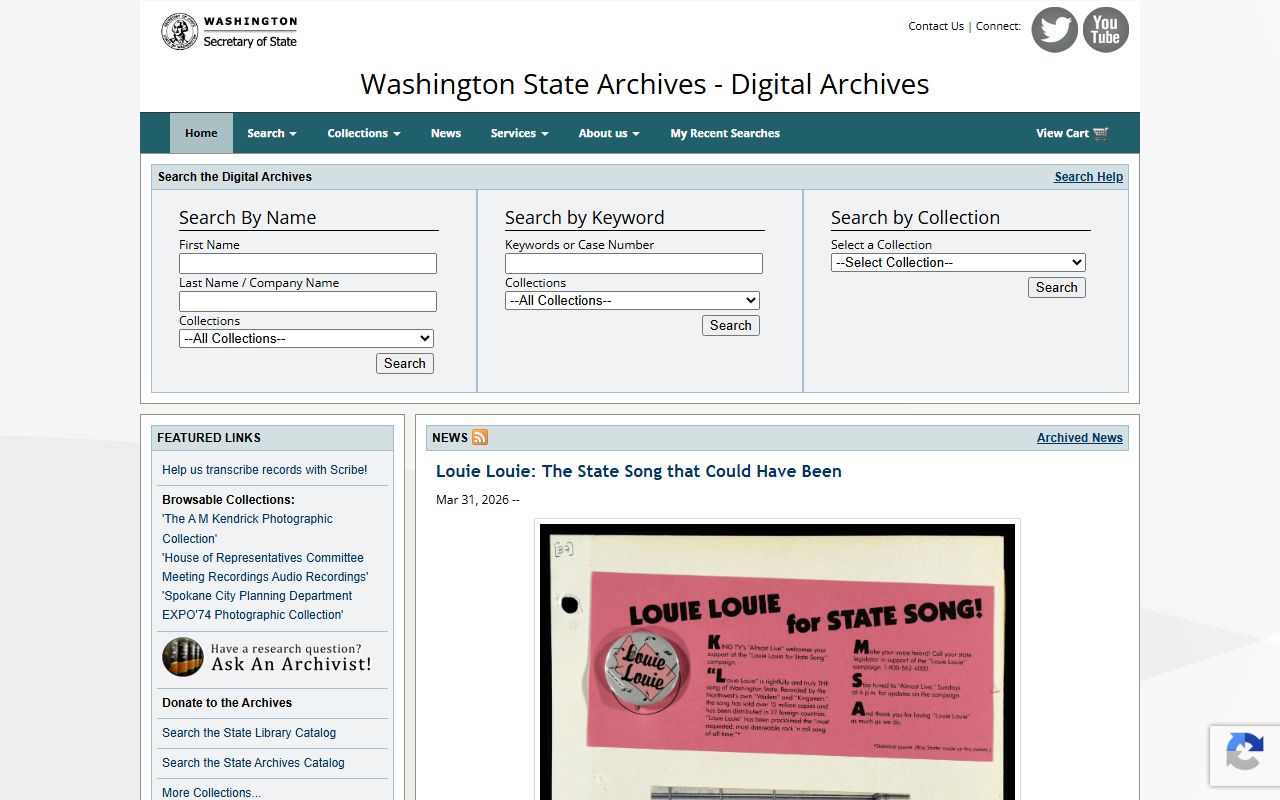
The Digital Archives partners with county clerks to make court records accessible while the official records remain at the county level, making it an important tool for researching older felony cases.
King County Felony Records Access
King County is the most populous county in Washington and runs the largest trial court in the state. The King County Superior Court handles thousands of felony cases each year. The court uses the KC Script Portal for online case access. As of November 12, 2024, all e-filing in King County Superior Court moved to KC Script. The portal provides 24-hour access for filing and records retrieval.
The KC Script Portal lets users search for cases by name, case number, or date range. Document images are available for many cases. Non-certified copies downloaded online cost $0.25 per page. Clerk-assisted copies are $0.50 per page. Certified copies cost $5 for the first page plus $1 for each additional page. Records purchased through KC Script stay available for 14 days after the request is processed.
The King County KC Script Portal provides direct online access to Superior Court felony case records including document images.
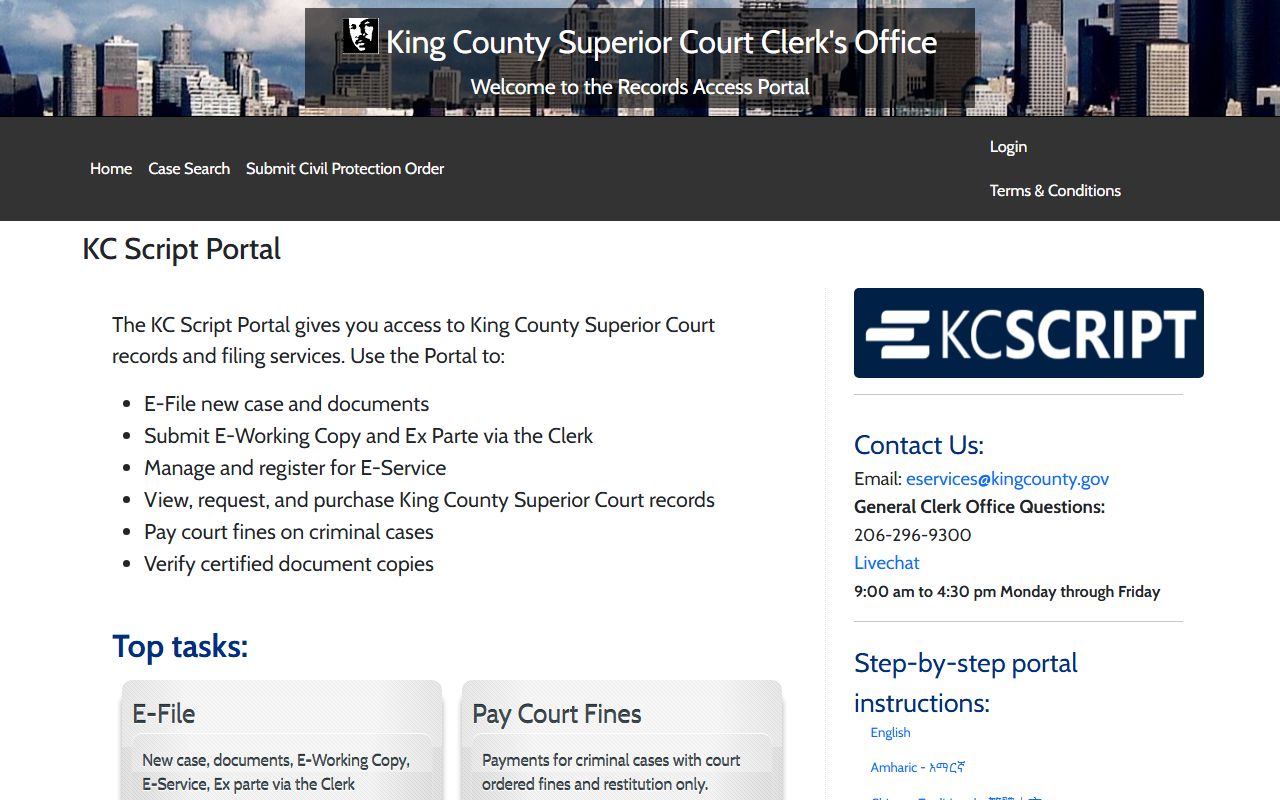
The KC Script Portal covers adult criminal cases filed in King County Superior Court from November 2004 forward, with searchable case summaries and downloadable documents.
King County Superior Court has three locations. The main King County Courthouse is at 516 3rd Avenue in Seattle. The Maleng Regional Justice Center is in Kent. The Patricia H. Clark Children and Family Justice Center handles juvenile matters. Felony criminal cases are handled at the main courthouse and the Kent facility. The King County Records Access FAQ page covers fees, research charges, and what records are available through the public portal versus restricted.
The King County Superior Court Records Access FAQ explains fees, document types, and how to request copies both online and in person.
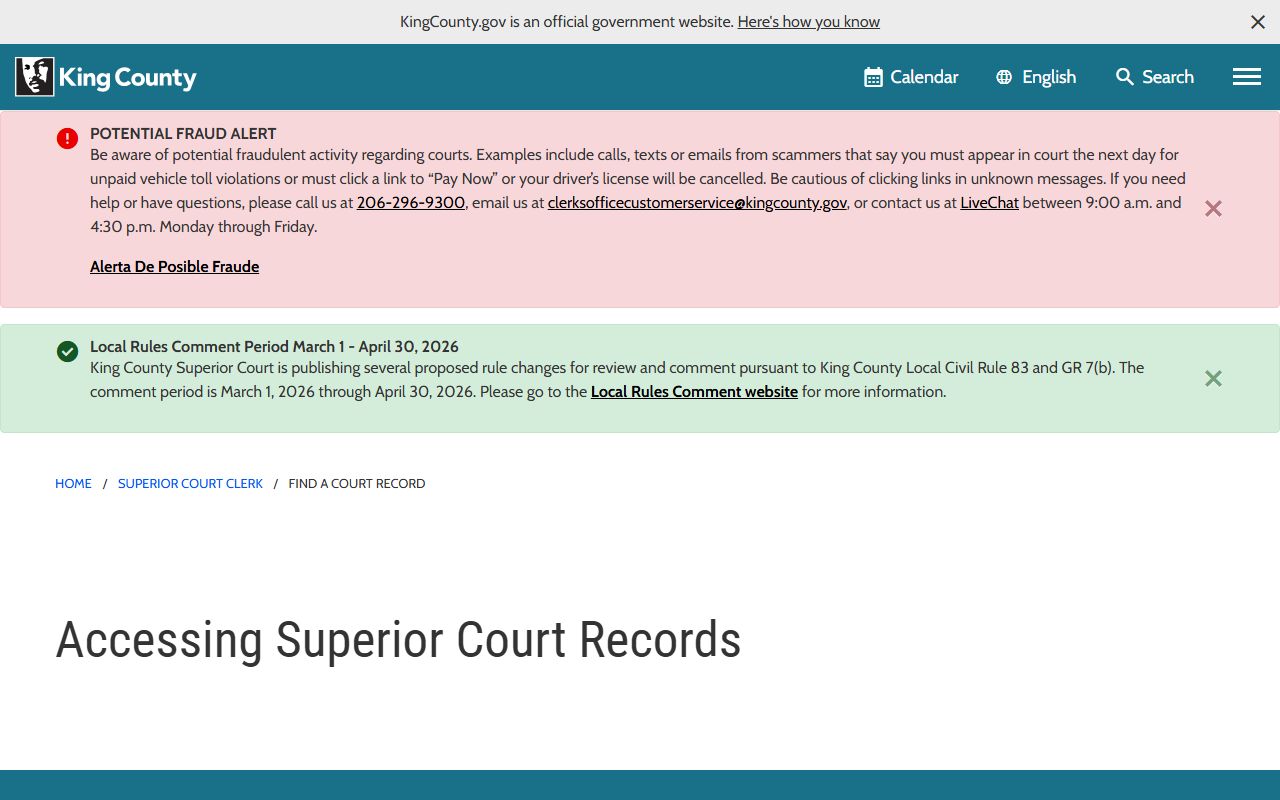
Research requests requiring clerk assistance in King County are billed at $30 per hour with a minimum charge of $30, which applies when staff must locate records without a specific case number.
Browse Washington Felony Records by County
Each of Washington's 39 counties has its own Superior Court Clerk who maintains felony case files. Pick a county below to find local contact info, online search tools, and resources for accessing felony records in that area.
View All 39 Washington Counties
Felony Records in Major Washington Cities
Residents of major cities file felony cases at the Superior Court in their county. Pick a city below to find where to go for felony records in that area.